May 15, 2020
How to decommission your water dispenser
With many people Australia working from home, you may need t...

Microplastics and nanoplastics have become one of today’s major environmental and public health concerns. These tiny particles are not only polluting our rivers, oceans, groundwater, and drinking water; research shows microplastics have made their way into the seafood we eat and even our own bodies, raising concerns about the long-term health effects on animals and humans.
Since microplastics are so small—often invisible to the naked eye—they can easily pass through conventional water treatment systems, making effective removal methods increasingly important.
With so much at stake, we think it’s time to put the issue of microplastics and nanoplastics under the microscope. Here’s everything you need to know, including where they come from, how does microplastic affect human health and the environment, and the latest thinking around how to remove nanoplastics from water.
Microplastics are tiny bits of plastic less than 5 millimetres across. You can find them in water, air, soil, and even food. They come in two types: primary microplastics, which are intentionally manufactured to be small, and secondary microplastics, which form when larger plastic items break down over time. They come from broken plastic waste, industrial activities, synthetic clothing, and personal care products like face scrubs. Because they are so small, microplastics can easily get washed down the drain or into water sources and are extremely difficult to filter out.
Nanoplastics are tiny bits of plastic that are smaller than 1 micron (1,000 nanometres). Unlike microplastics, which are visible under a microscope, nanoplastics are so small that they can enter cells and tissues, potentially causing oxidative stress, inflammation, and chemical exposure. Scientists are increasingly studying nanoplastics because of their widespread presence in drinking water and food chains, with concerns that they may bioaccumulate in living organisms.
As research continues, experts are exploring advanced technologies to use in more effectively filtering microplastics from water and reducing their environmental impact.
As we’ve mentioned, microplastics and nanoplastics have become widespread pollutants. Here are the main ways they contaminate our drinking water:
A common way microplastics enter water is through surface runoff. When it rains, water flows over land and carries plastic waste, tiny fibres from clothes, and bits from rubber tyres into storm drains, which lead to natural water bodies. Farming also adds to this problem, as plastic-coated slow-release fertilisers and plastic mulch degrade over time, releasing small plastic pieces into streams and groundwater. Once microplastics enter rivers and lakes via runoff, they can travel long distances, accumulating in reservoirs and eventually reaching drinking water treatment plants. Since conventional filtration methods may not always catch these tiny pollutants, they can persist in municipal water supplies.
Another major source of microplastics is the breakdown of larger plastic items. We often forget that plastics never fully biodegrade. Instead, over time, discarded plastic products—such as bottles, bags, and packaging materials—are exposed to sunlight, wind, and water currents and break down into progressively smaller particles, forming microplastics and eventually nanoplastics. These tiny pollutants eventually enter water sources and because they are so small and bypass traditional water treatment systems, they can become consumed by marine life or flow into our municipal water supplies.
Municipal wastewater treatment plants are another major entry point for microplastics and nanoplastics in drinking water. Plastics from household products, cosmetics, synthetic fabrics, and industrial wastewater are flushed down drains and make their way into sewage systems. While treatment plants are designed to remove many contaminants, they are not 100% effective at filtering out microplastics, especially the smallest particles. In some cases, treated wastewater is released back into rivers and lakes, where microplastics can accumulate and enter drinking water sources. Additionally, biosolids (a byproduct of wastewater treatment) are often used as agricultural fertiliser, further spreading microplastic contamination into soil and water systems.
Ironically, bottled water is one of the largest contributors to microplastic contamination. Studies have shown that plastic water bottles can shed microplastics and nanoplastics into the water they contain, especially when exposed to heat or prolonged storage. The friction caused by opening and closing bottle caps can also release plastic particles into the water. Additionally, plastic-based food packaging and storage containers contribute to contamination when microwaved, scratched, or broken down over time. Every time you consume bottled water or packaged beverages, you may also be unknowingly ingesting microplastics directly from the packaging itself. Now that’s some food for thought!
Factories and industrial facilities release plastic particles into the environment through airborne emissions, improper waste disposal, and untreated wastewater. Industries that produce plastic products, textiles, paints, and coatings often generate microplastic waste, which can end up in nearby water sources. Plastic-based industrial abrasives, such as microbeads used in sandblasting and polishing, also contribute to contamination. When these tiny particles are not properly filtered, they enter wastewater streams and eventually contaminate drinking water supplies.
Microplastics don’t just travel through water—they are also found in the air and rain, contaminating drinking water through atmospheric deposition. Studies have detected plastic particles in rainwater, meaning that airborne microplastics—often released from burning plastic waste, industrial pollution, and vehicle emissions—can fall into lakes, reservoirs, and water treatment facilities. Since these tiny particles are lightweight and easily carried by wind, they can spread across vast distances, reaching even the most remote water sources. As a result, rainwater harvesting systems and open water bodies are increasingly affected by plastic pollution from the atmosphere.
Now we know all the ways they get into tap water, bottled water, and food; that’s not the only problem. As research continues to uncover the potential health risks associated with plastic particle consumption, including that microplastics and nanoplastics are entering human bodies and accumulating in organs, the bloodstream, and cells. Scientists are increasingly warning about the long-term effects of plastic exposure.
The question remains: can nanoplastics be filtered out of water? Well, the good news is it’s not all doom and gloom—we do know some ways on how to remove nanoplastics in water, such as:
Distillation works by heating water to create steam, which is then cooled back into liquid, leaving most contaminants behind. However, chemicals found in plastics may still end up in distilled water if they evaporate during the distillation process. It’s a good way to remove nanoplastics, but there are better options.
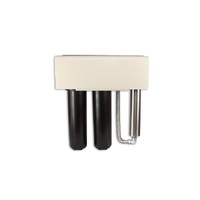
You can use water filters to remove nanoplastics. For example, reverse osmosis systems incorporate an RO membrane with a pore size of around 0.0001 microns (0.1 nanometers), and this filter is tiny enough to catch micro and nanoplastics. It’s very effective at filtering microplastics from water, but it can waste some water and may need regular maintenance to keep working well.
Ultrafiltration is similar to reverse osmosis but uses a different type of filter. It can also use its water filters to take out microplastic and some bacteria, making water cleaner. This method is efficient, but it may not remove all types of chemicals found in microplastics. You should strongly consider high-quality drinking water systems for your home or workplace.
Without a doubt, microplastic and nanoplastic contamination in water is a growing cause for concern. And as plastic pollution grows, it’s even more pressing that we’re conscious of the magnitude of the problem and learn how to remove nanoplastics in water now in order to reduce exposure and protect our long-term health and ecosystems.
Ensure your family’s drinking water is clean, safe, and free from microplastics and nanoplastics with Aquastream’s advanced water filter systems. Our cutting-edge technology effectively removes harmful plastic contaminants, giving you pure, great-tasting water straight from the tap. Don’t let invisible pollutants compromise your health—take control of your water quality today. Explore our range to help you with filtering microplastics from water to protect what matters most!